Spirulina Growing Kit Types: Complete, Starter, Media, and DIY
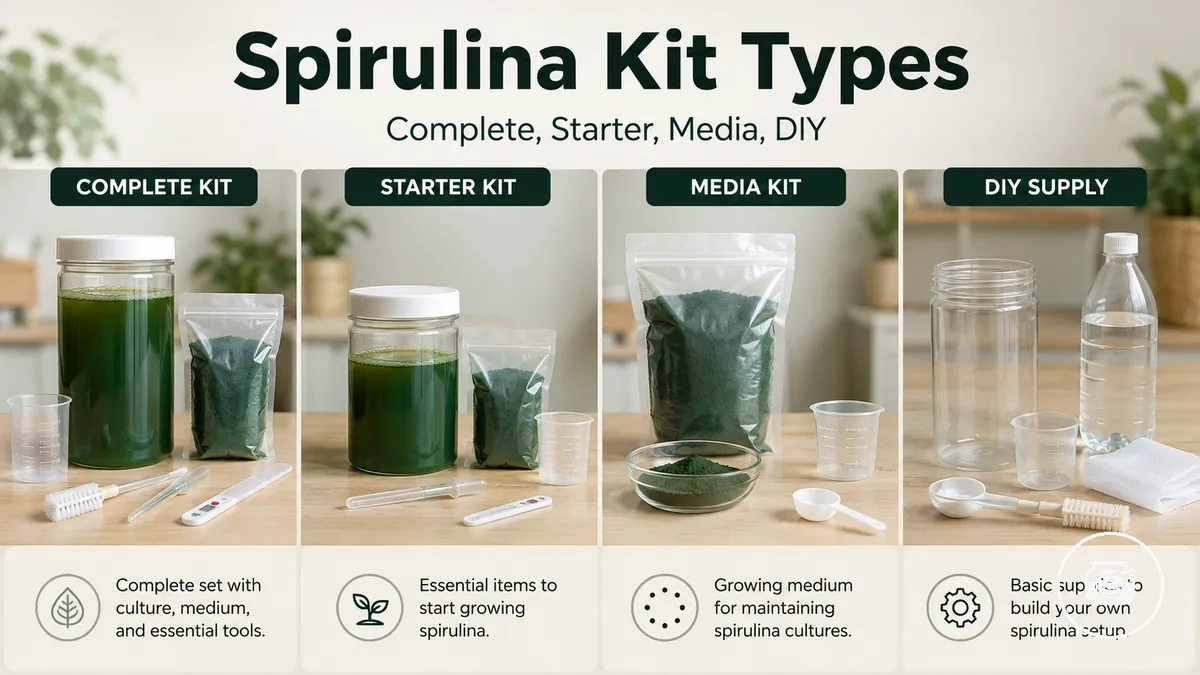
Spirulina growing kit types are primarily distinguished by their included components and the level of buyer responsibility after purchase. Buyers typically choose between a complete kit, starter culture kit, media kit (grow medium kit), and DIY bundle, with each category representing a different balance between convenience, setup burden, missing supplies, and control over the growing system. Current supplier evidence also shows that these labels are commercial categories rather than standardized product classifications, so the contents of each bundle should be verified before comparing offers.
Spirulina growing kit types are primarily distinguished by their included components and the level of buyer responsibility after purchase.
Someone comparing spirulina growing kit types is usually deciding which bundle format matches their available equipment, budget, and willingness to source additional materials before evaluating individual products. A complete kit generally reduces buyer responsibility because it commonly includes more essential growing supplies, while starter culture kits, media kits, and DIY bundles leave progressively more items for the buyer to obtain separately. Because suppliers package these kits differently, comparing included components before comparing brands creates a more reliable decision framework.
This page therefore compares kit formats and buyer responsibilities instead of ranking products or explaining cultivation procedures.
A spirulina growing kit type is a bundle category defined by the combination of culture, grow medium, equipment, and supporting supplies included with the purchase. Unlike regulated technical classifications, no recognized international standard currently defines what qualifies as a complete kit, starter culture kit, media kit, or DIY bundle, so these names function as commercial descriptions rather than legally standardized categories. This page therefore compares kit formats and buyer responsibilities instead of ranking products or explaining cultivation procedures.
A common misconception is that two products labeled as a "complete kit" contain equivalent supplies.
A common misconception is that two products labeled as a "complete kit" contain equivalent supplies. In practice, supplier documentation shows that one complete kit may include containers, lighting, nutrients, harvesting tools, and a live culture, while another may omit one or more of those items. Comparing the actual included components and identifying missing supplies provides a more reliable basis for evaluating spirulina growing kit types than relying on the marketing label alone.
Table of Contents
What Counts as a Spirulina Growing Kit Type?
A spirulina growing kit type is a bundle category defined by what the kit includes, what the buyer is expected to provide, and how much setup responsibility remains with the buyer. The defining values are whether included culture, grow medium, equipment, and support items are present or absent, so the kit type is determined by both included supplies and missing supplies.
Kit labels help group spirulina growing kits, but a label alone does not confirm the contents because sellers may use the same wording for different supply sets. A complete kit indicates broader inclusion, a starter culture kit centres on live culture, a grow medium kit or media kit centres on cultivation medium, and a DIY bundle leaves component selection mainly to the buyer. What counts as a spirulina growing kit type is therefore the relationship between included items, assumed equipment, and remaining buyer responsibility.
- Label suggests: The intended kit format, such as complete, starter culture, media, grow medium, or DIY.
- Contents confirm: Whether culture, medium, equipment, and support items are included, missing, or expected to come from the buyer.
A matching kit label does not establish that two bundles contain equivalent supplies. The reviewed evidence does not identify a recognised standard that fixes the contents of complete kits, starter culture kits, media kits, or DIY bundles. The reliable evaluation rule is to classify each spirulina growing kit type by its listed contents and missing requirements rather than by its name alone.
Complete, Starter, Media, and DIY Spirulina Kit Types
The four main spirulina kit types differ by how much they include versus how much the buyer must supply. A complete spirulina growing kit typically combines included culture, grow medium, basic hardware, and supporting supplies, while a starter kit, media kit (or grow medium kit), and DIY spirulina kit progressively increase user responsibility by leaving more components to the buyer. Because suppliers do not follow a universal bundle standard, these categories describe typical package formats rather than fixed product definitions.
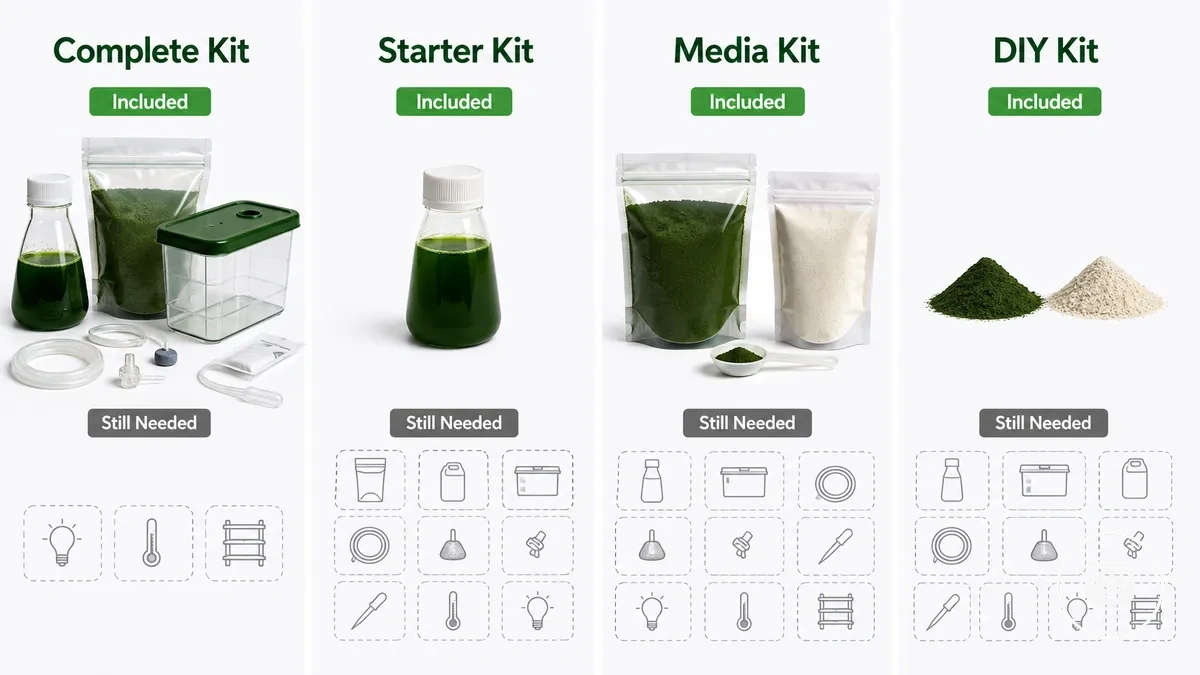
Buyer readiness changes the decision burden for each kit type because existing equipment and supplies determine what must still be sourced. For example, a media kit is usually suitable for someone who already maintains a live spirulina culture, whereas a first-time grower normally still requires both the biological culture and growing hardware. The comparison below contrasts complete, starter, media, and DIY spirulina kit types by what they commonly include and what they typically leave to the buyer without assuming every seller packages kits in the same way.
| Kit type | Usually included | Commonly still needed | Best-fit buyer situation |
|---|---|---|---|
| Complete spirulina growing kit | Included culture, grow medium, basic hardware, and essential support supplies | Suitable water source, power for equipment if required, and an appropriate growing location | New growers wanting the lowest practical sourcing burden |
| Starter kit | Included culture, basic guidance, and sometimes limited nutrients | Missing hardware, growing container, lighting, and often additional grow medium | Buyers who already own some cultivation equipment |
| Media kit or grow medium kit | Nutrients, alkaline grow medium ingredients, or maintenance medium | Live culture, growing hardware, and cultivation container | Existing growers maintaining or expanding an active culture |
| DIY spirulina kit | Minimal supplied components or a self-sourcing parts bundle | Culture, grow medium, hardware, measuring tools, and setup materials selected by the buyer | Experienced users seeking greater control over component selection |
Complete Spirulina Growing Kits
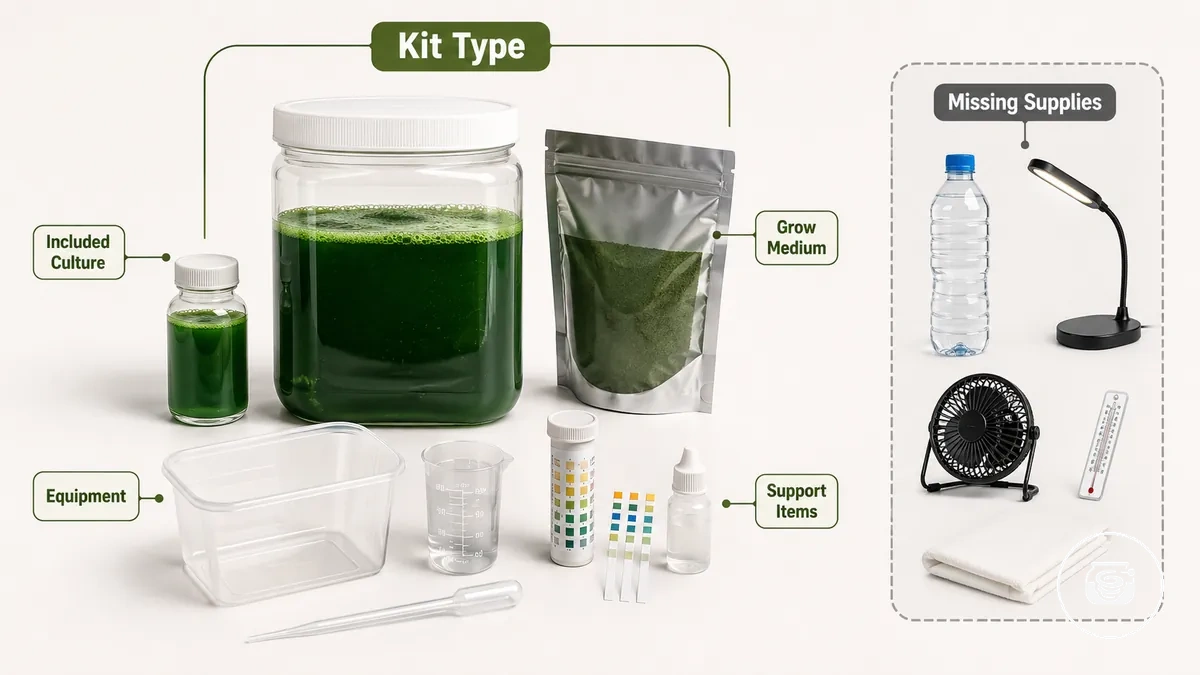
A complete spirulina growing kit is the lower-sourcing option within this comparison because it usually combines the main cultivation supplies into one bundle, although the exact contents depend on the seller rather than an industry-wide standard. Complete spirulina growing kits commonly include an included culture, grow medium, container support, testing items, and instructions, but buyers should verify the bundle contents before purchase because completeness is conditional.
Complete spirulina growing kits are easiest to evaluate when the included supplies and items requiring verification are viewed separately, as the annotated image shows without implying that every seller includes identical components.
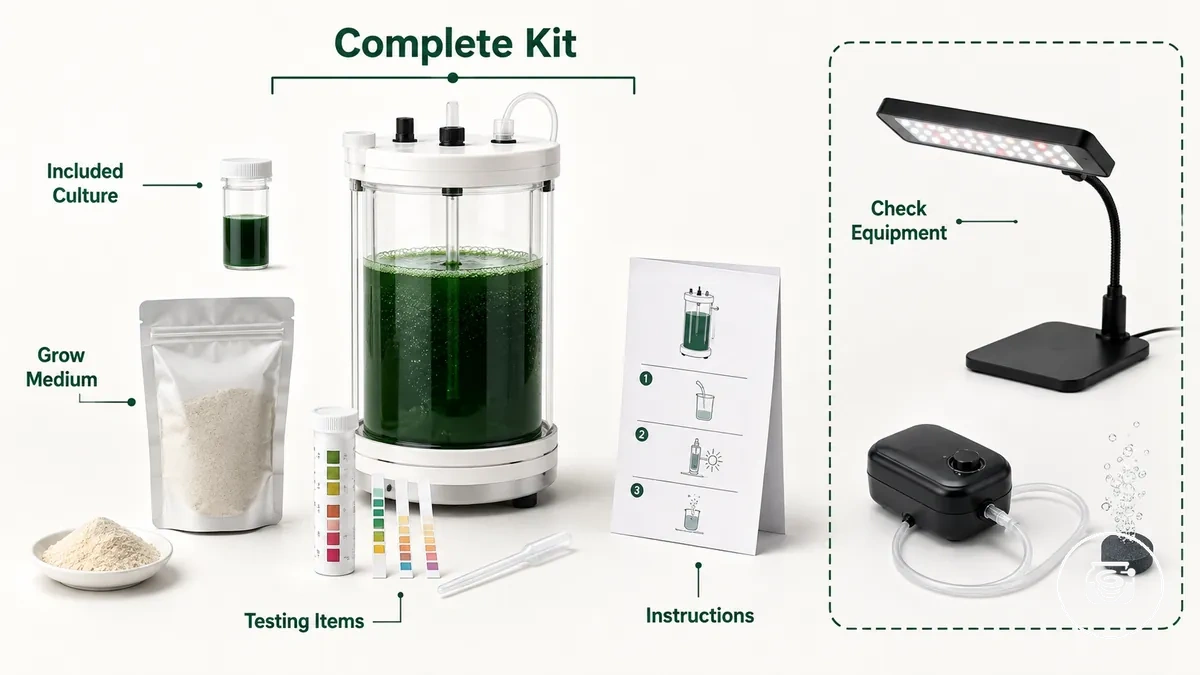
- Included culture: A live spirulina starter culture is commonly supplied.
- Grow medium: Nutrient salts or prepared cultivation medium are commonly included.
- Container support: A growing vessel or basic cultivation container may be included, depending on the bundle.
- Testing items: Basic monitoring tools and setup instructions are often provided for initial cultivation.
- Missing equipment: Lighting, aeration, temperature control, or other environmental equipment may still require separate purchase, depending on the seller's package.
For example, a first-time grower who already has a suitable light and growing location may choose a complete spirulina growing kit to reduce sourcing work because the culture, grow medium, and basic cultivation supplies are bundled together. Buyers seeking maximum customisation may instead prefer sourcing components individually, so the final check should always confirm whether any environmental equipment remains a missing item.
Spirulina Starter Culture Kits
Spirulina starter culture kits are culture-centered bundles whose primary purpose is to supply a live culture rather than a full growing setup. They typically include live spirulina culture, while the grow medium, container, suitable water conditions, and cultivation equipment may still need to be supplied or verified by the buyer. The distinguishing feature is that a spirulina starter culture kit provides the biological starting culture, not a complete cultivation system.
Spirulina starter culture kits are culture-centered bundles whose primary purpose is to supply a live culture rather than a full growing setup.
Spirulina starter culture kits are easiest to compare when the supplied live culture is separated from the remaining setup requirements, as illustrated below, because the image distinguishes a culture purchase from a full growing setup without implying identical seller bundles.
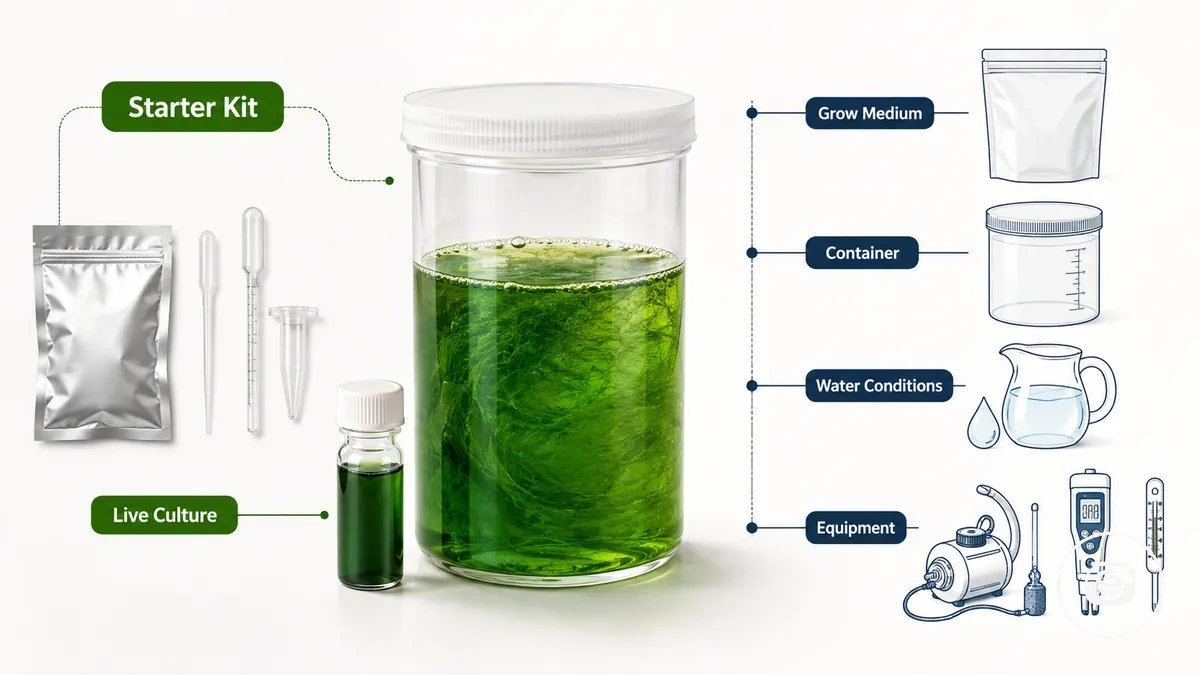
- Live culture: The primary supplied component is a live spirulina starter culture.
- Grow medium: Nutrient medium may be included in some kits but often requires separate purchase or replenishment.
- Container: A suitable cultivation vessel is commonly required if one is not bundled.
- Water conditions: Buyers remain responsible for preparing appropriate cultivation water before growing begins.
- Equipment: Lighting, aeration, monitoring tools, and other cultivation equipment may still form part of the missing setup requirements.
For example, a buyer with existing supplies such as a cultivation container and basic equipment may find a spirulina starter culture kit more economical because only the live culture needs to be added. Buyers without those existing supplies should confirm the missing setup requirements before purchase, as the kit is designed to provide culture rather than a complete growing system.
Spirulina Media and Grow Medium Kits
Spirulina media and grow medium kits are supply-focused options that provide an alkaline medium, nutrients, or salts for cultivation, but they generally do not provide the live culture and hardware needed for a complete growing system. A spirulina media kit therefore reduces medium-sourcing work while leaving the biological culture, vessel, and equipment as separate buyer requirements.
The kit should be evaluated by the cultivation function it enables rather than by the word “kit” alone.
A grow medium kit supplies ingredients or prepared media intended to create suitable cultivation conditions, with a preparation requirement determined by whether the seller provides a dry nutrient mix, concentrated solution, or ready-to-use medium. Culture compatibility must be confirmed against the seller’s stated culture type and preparation instructions because the reviewed evidence does not establish one formulation that applies to every spirulina culture or growing system. The kit should be evaluated by the cultivation function it enables rather than by the word “kit” alone.
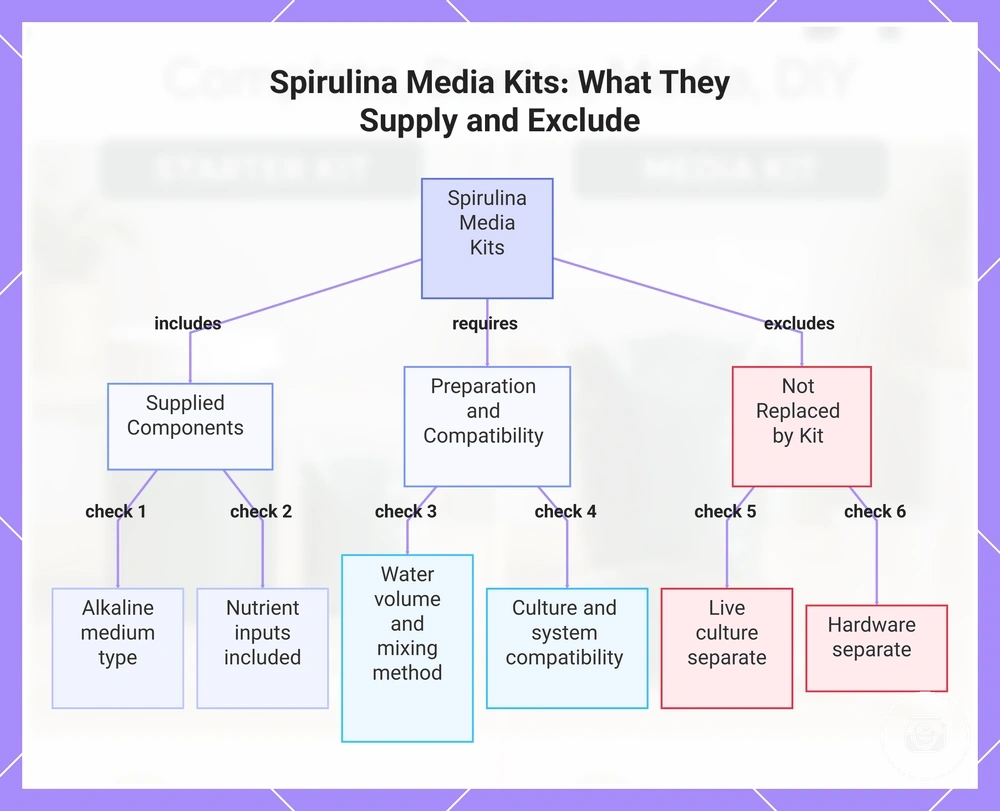
Use the checklist below to verify what spirulina media and grow medium kits supply and what they do not replace; individual components are covered in more detail under kit parts explained .
Use the checklist below to verify what spirulina media and grow medium kits supply and what they do not replace; individual components are covered in more detail under kit parts explained.
- Alkaline medium: Confirm whether the kit supplies prepared medium, a concentrate, or dry ingredients for mixing.
- Nutrients and salts: Check which cultivation inputs are included and whether replenishment supplies are separate.
- Preparation requirement: Verify the required water volume, mixing method, and preparation sequence in the seller’s instructions.
- Culture compatibility: Confirm that the supplied medium is intended for the buyer’s spirulina culture and cultivation system.
- Live culture and hardware: Treat both as separate requirements unless the bundle contents explicitly list them.
This chart shows the components supplied by spirulina media and grow medium kits, the preparation and compatibility requirements, and what they do not replace.
DIY Spirulina Growing Kit Bundles
DIY spirulina growing kit bundles are higher-control, higher-responsibility options in which the buyer assembles a self-sourced setup rather than relying on a consistently packaged supply set. A DIY spirulina growing kit increases sourcing control, but it also makes component compatibility, missing safeguards, and overall setup responsibility buyer-managed requirements. Because the included items are selected separately, a DIY bundle can vary more than a packaged kit type.
Because the included items are selected separately, a DIY bundle can vary more than a packaged kit type.
A buyer with existing equipment and a clear component list may prefer a DIY bundle because custom selection can avoid unwanted duplicate supplies. The same flexibility creates hidden effort when the buyer overlooks monitoring tools, environmental equipment, maintenance materials, or compatible connections, increasing the risk of underestimating supplies. Suitability therefore depends on whether the buyer is prepared to verify every required component rather than expecting packaged convenience.
DIY spirulina growing kit bundles exchange convenience for control, as the following trade-off block shows.
DIY spirulina growing kit bundles exchange convenience for control, as the following trade-off block shows.
| DIY advantage | Buyer responsibility |
|---|---|
| Select culture, medium, vessel, and equipment separately | Confirm component compatibility across the self-sourced setup |
| Reuse suitable supplies already owned | Identify missing safeguards, monitoring tools, and environmental equipment |
| Exclude unwanted bundled components | Verify the complete supply list before treating the DIY bundle as sufficient |
This local explanation defines the DIY bundle within the kit-type comparison; broader evaluation of cost, workload, and packaged-kit trade-offs belongs in the DIY setup comparison.
Components That Change Kit Type Value
Components change kit type value according to what each inclusion changes for the buyer: an included essential can remove a prerequisite, while a missing item can increase setup burden, total sourcing effort, or reduce suitability. The practical value of a kit therefore depends on the relationship between included supplies, missing supplies, and buyer readiness, with culture and medium treated as essential growth inputs and items such as testing or extra support equipment treated as monitoring or convenience supplies.
The table connects the components that change kit type value to their present-or-missing condition and resulting buyer effect.
A buyer who already owns a suitable container may gain little from receiving another one, whereas a first-time grower may value that same inclusion because it removes a separate sourcing task. Component presence alone does not establish quality; the decision signal is whether the component closes a required input, reduces remaining work, or duplicates existing equipment, with individual roles clarified under kit parts explained. The table connects the components that change kit type value to their present-or-missing condition and resulting buyer effect.
| Component | Attribute or condition | Value signal | Effect on kit type decision |
|---|---|---|---|
| Culture | Live culture included or missing | Essential biological input | Included culture closes the biological starting requirement; missing culture means the buyer must source it separately before cultivation can begin. |
| Medium | Initial grow medium included, limited, or missing | Essential cultivation input | Included medium reduces initial sourcing work; a limited quantity or missing medium leaves preparation or replenishment responsibility with the buyer. |
| Container | Suitable vessel included or buyer-supplied | Setup convenience | An included container can reduce setup burden for buyers without one, but it may duplicate existing supplies for prepared buyers. |
| Testing | Monitoring items included or omitted | Monitoring support | Included testing items reduce separate monitoring purchases, but they do not replace culture, medium, or a suitable vessel. |
| Support equipment | Lighting, aeration, or related equipment included or buyer-supplied | Conditional convenience | Included equipment can reduce assembly effort when it matches the intended setup; missing or incompatible equipment increases verification and sourcing responsibility. |
Live Culture, Nutrients, and Alkaline Medium
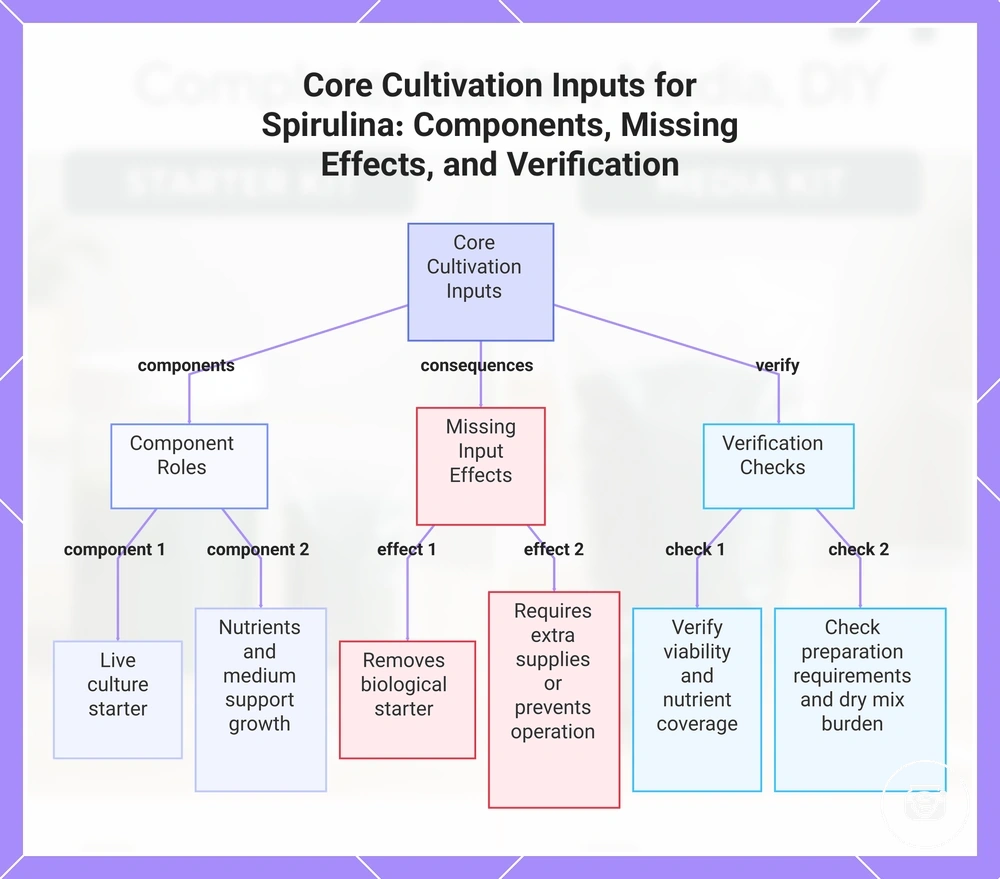
Live culture, nutrients, and alkaline medium are core cultivation inputs because the culture supplies the living spirulina, while the nutrients and culture medium provide its supporting growth environment. Their contribution to kit value is conditional on documented culture viability, sufficient nutrient completeness, and declared medium compatibility; a culture-centred kit supplies biological growth potential, whereas a medium-only kit supplies support materials without the starter culture.
Dry nutrient mixes or grow salts also increase preparation burden when the buyer must measure and mix them according to the supplier's stated water volume and preparation instructions.
A missing input lowers practical kit value by transferring an essential requirement to the buyer: missing live culture removes the biological starting material, incomplete nutrients leave additional supplies to source, and incompatible alkaline medium prevents the supplied components from operating as an intended set. Dry nutrient mixes or grow salts also increase preparation burden when the buyer must measure and mix them according to the supplier's stated water volume and preparation instructions. Before treating the component group as cultivation-ready, verify the supplier's viability information, included nutrient coverage, preparation requirements, and stated culture compatibility.
This chart shows the three core cultivation inputs for spirulina, their roles, the consequences of missing inputs, and the verification checks needed before use.
This chart shows the three core cultivation inputs for spirulina, their roles, the consequences of missing inputs, and the verification checks needed before use.
Container, Light, Air, and Testing Supplies
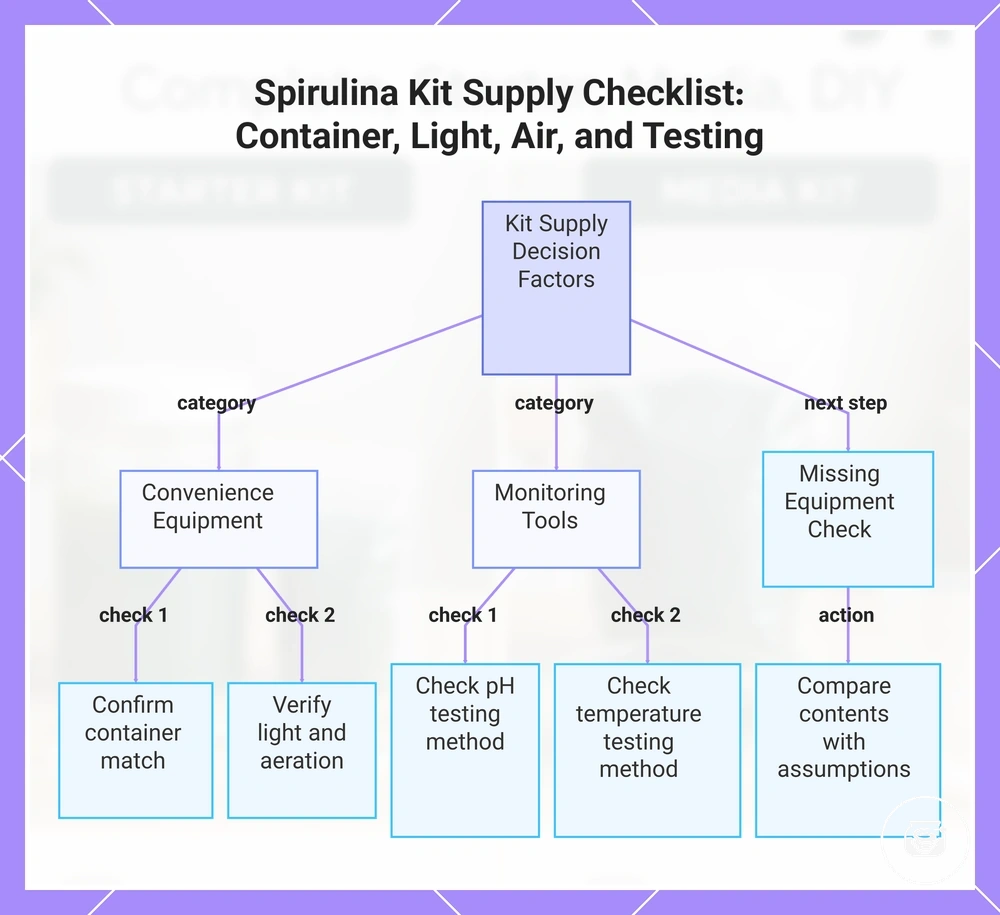
Container, light, air, and testing supplies primarily change setup burden and monitoring confidence; they do not define a spirulina kit type by themselves. Their decision value is conditional: an included vessel, grow light, aeration or mixing device, and monitoring tool can remove separate sourcing tasks, while any item still required remains the buyer's responsibility under the intended kit design and home environment.
Container, light, air, and testing supplies primarily change setup burden and monitoring confidence ; they do not define a spirulina kit type by themselves.
A buyer who already owns compatible equipment may find a supply-focused kit suitable even when physical equipment is omitted, whereas a buyer without those items faces additional sourcing and compatibility checks. The checklist below separates equipment that changes convenience from monitoring tools that improve observation, without implying identical requirements for every setup.
- Container: Confirm that the supplied vessel, or an existing one, matches the kit's stated use and intended culture volume; if neither is confirmed, the container remains a missing setup item.
- Light: Treat a grow light as included only when the bundle lists it; otherwise, verify whether the planned home environment and kit instructions assume another light source.
- Air or mixing: Confirm whether the kit includes aeration or mixing equipment when its design assumes active circulation; omission transfers that equipment check to the buyer.
- pH testing: Included test strips or another pH testing tool increase monitoring confidence by giving the buyer a stated method for checking pH; if omitted, the monitoring method remains unspecified by the kit.
- Temperature testing: An included thermometer provides a direct temperature testing method, while an omitted tool leaves temperature monitoring to existing buyer equipment.
- Missing equipment: Compare the listed contents with the seller's operating assumptions so that every still required container, light, air, mixing, or testing item is identified before the kit is judged suitable.
This chart shows the key checks for container, light, air/mixing, and testing supplies when evaluating a spirulina kit, grouped by convenience equipment, monitoring tools, and missing equipment verification.
Setup Burden and Missing Supplies by Kit Type
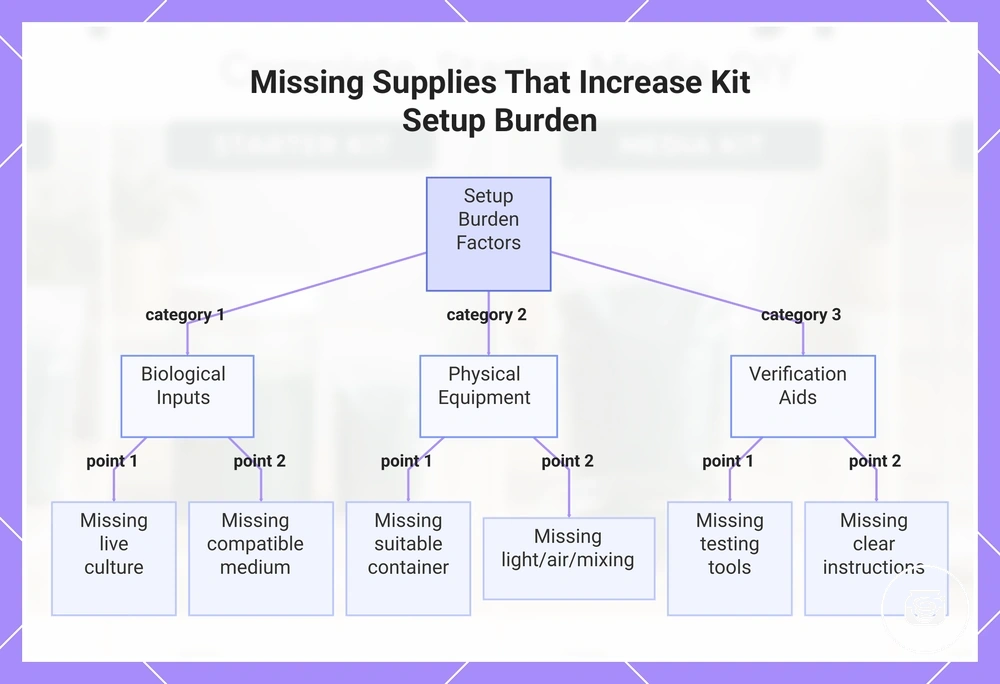
Setup burden depends on what each kit type leaves the buyer to source, verify, or configure after purchase. A missing culture, medium, container, light, air or mixing device, testing tool, or instruction set can increase effort, create delay, or add compatibility risk, so the practical burden must be judged from the remaining supplies rather than the kit label alone.
Setup burden depends on what each kit type leaves the buyer to source, verify, or configure after purchase.
A buyer with suitable existing supplies may find a starter kit or DIY bundle suitable because the omitted equipment does not create additional work. A buyer starting from zero may receive lower sourcing burden from a complete kit, but only when the listed contents close the buyer's actual requirements. The relevant buyer condition is therefore the gap between what the kit includes and what the buyer already owns.
The relevant buyer condition is therefore the gap between what the kit includes and what the buyer already owns.
Small omissions can be underestimated because a kit may contain its main item while still excluding monitoring tools, compatible equipment, or clear instructions. The checklist below evaluates setup burden and missing supplies by kit type by connecting each missing requirement to its likely effect on effort, delay, or risk before purchase.
- Culture: If live culture is missing and the buyer does not already have a viable culture, the kit leaves an essential biological input to source separately.
- Medium: If compatible grow medium is missing or supplied only for an initial batch, the buyer retains preparation or replenishment responsibility.
- Container: If no suitable vessel is included or already owned, the buyer must confirm volume and material compatibility before judging the kit suitable.
- Light or air: If the kit design assumes lighting, aeration, or mixing equipment that is not included, the omission can increase sourcing effort and delay setup.
- Testing: If pH or temperature monitoring tools are absent, the buyer must rely on existing equipment or source separate testing supplies.
- Instructions: If the supplier does not specify preparation requirements, included quantities, or compatibility conditions, uncertainty increases even when the physical components appear sufficient.
- Existing supplies: Compare every remaining requirement with equipment already owned; for broader decision criteria, see choosing between kit types.
This chart identifies key missing supply categories and specific omissions that increase effort, delay, or risk when evaluating kit types.
Cost and Effort Trade-offs Across Kit Types
Cost and effort trade-offs across kit types depend on the combined effect of upfront cost and the remaining sourcing or setup effort after purchase. A kit with lower initial price exposure can create a higher total burden when essential supplies are missing, while a more inclusive kit can reduce later work at the cost of higher upfront exposure. The resulting value outcome is therefore conditional on both included components and buyer readiness.
The resulting value outcome is therefore conditional on both included components and buyer readiness.
A buyer who already owns compatible equipment may obtain a suitable value balance from a starter, media, or DIY option because omitted items do not create the same extra expense. A buyer starting without culture, medium, or equipment may gain greater decision confidence from a complete kit when its listed inclusions remove separate sourcing tasks. The matrix below presents a qualified comparison of cost and effort trade-offs across kit types by total burden rather than exact prices.
| Kit type | Upfront cost tendency | Extra effort tendency | Value risk | Best-fit decision context |
|---|---|---|---|---|
| Complete | Higher price exposure when more core supplies and equipment are included | Reduced sourcing effort when the listed contents close the buyer's remaining requirements | Paying for duplicate components or assuming that the label confirms every required item | Buyers with few existing supplies who prioritise convenience and decision confidence |
| Starter | Lower price exposure because the bundle centres on live culture | Added work when medium, container, lighting, air, or testing supplies remain separate | Hidden supply cost can raise total burden after purchase | Buyers who already own compatible cultivation equipment |
| Media | Lower price exposure because the bundle centres on nutrients or alkaline medium | Added work when live culture and physical equipment must be supplied separately | The bundle may not provide a usable starting system when biological inputs are absent | Buyers maintaining or expanding an existing culture setup |
| DIY | Price exposure is distributed across separately selected components | Greater sourcing and compatibility effort because the buyer assembles the supply set | Overlooked parts or duplicated purchases can increase total burden | Prepared buyers who value sourcing control and can verify component compatibility |
Hidden supply cost occurs when omitted culture, medium, equipment, testing tools, or support items create extra expense after the initial purchase. Because sellers do not use one standard bundle definition, a defensible value rule is to compare listed inclusions, remaining purchases, and sourcing effort instead of treating a lower kit price as lower total cost.
Hidden supply cost occurs when omitted culture, medium, equipment, testing tools, or support items create extra expense after the initial purchase.
The appropriate cost-effort fit is the kit type whose upfront cost and remaining work align with the buyer's existing supplies and tolerance for setup effort. Lower total burden can improve decision confidence, but it is not automatically the preferred trade-off when the buyer values component control or already owns the omitted supplies.
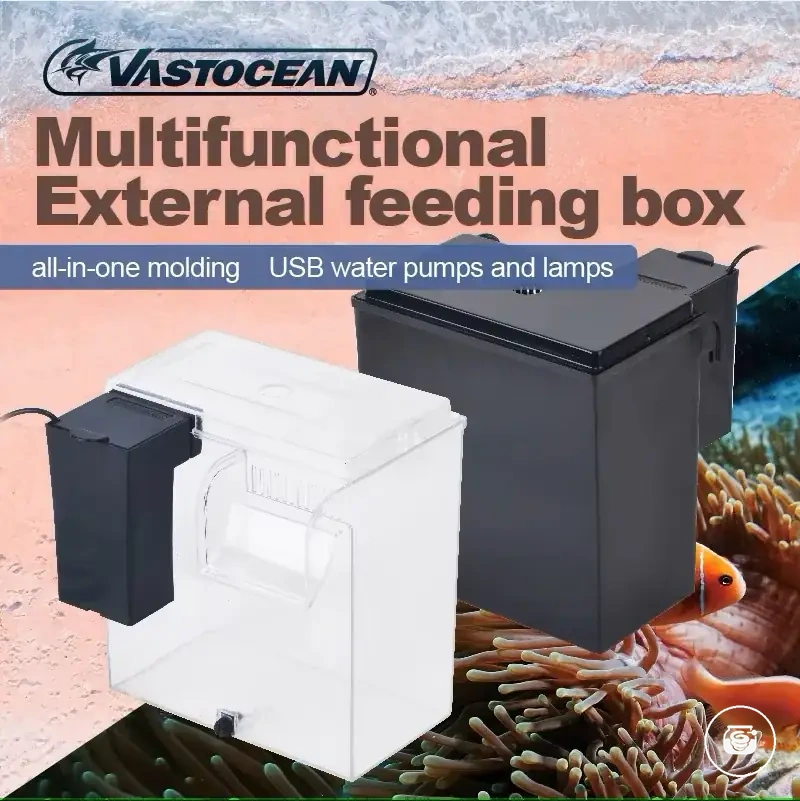
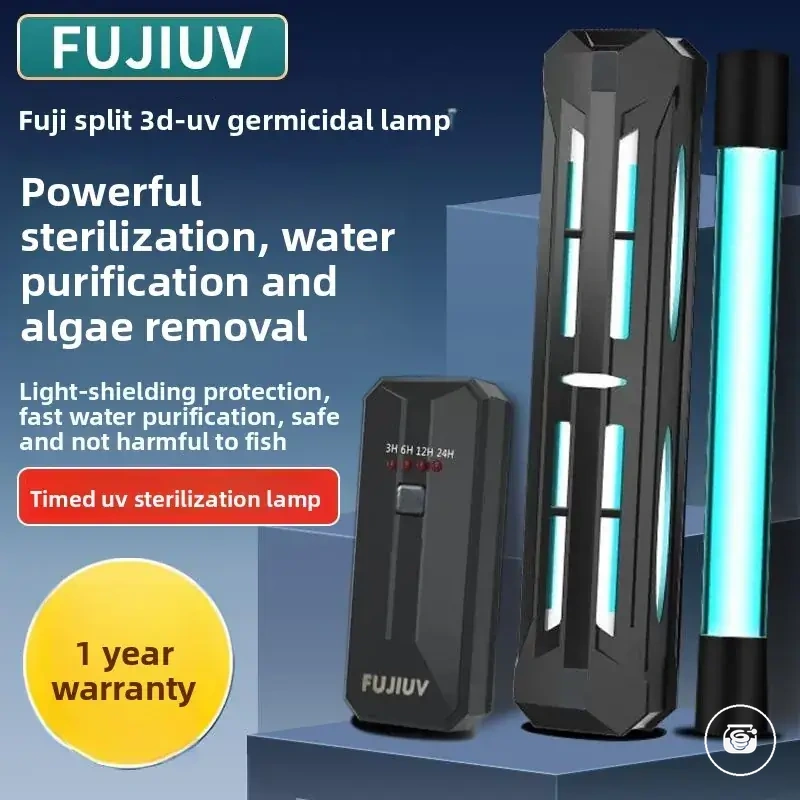
The products below are useful examples for comparing available options.
The products below are useful examples for comparing available options. Before buying, check that the compatibility criteria, key features, and product details match your needs.
Which Spirulina Kit Type Fits Each Buyer Situation?
The suitable kit type depends on the buyer situation, specifically buyer readiness, existing supplies, sourcing tolerance, convenience needs, and preference for DIY control. No single kit type suits every buyer because a change in equipment ownership, experience, or desired control changes suitability. A defensible selection therefore matches buyer constraints to the support and responsibility associated with each kit format.
A defensible selection therefore matches buyer constraints to the support and responsibility associated with each kit format.
A beginner without culture, medium, or equipment may find a complete kit suitable when its listed contents reduce separate sourcing and include usable instructions. A convenience-focused buyer may reach the same decision when reducing component checks matters more than customising the setup. Complete-kit suitability remains conditional on confirming that the bundle includes the buyer's required biological inputs, medium, and physical equipment.
These conditions should guide choosing between kit types rather than the kit label alone.
A buyer with compatible existing supplies may find a starter kit suitable when live culture is the main missing input, while a media kit may suit someone who already has a viable culture and equipment but needs nutrient medium. An experienced buyer with greater sourcing tolerance may prefer DIY control because component selection and compatibility checks remain buyer-managed. These conditions should guide choosing between kit types rather than the kit label alone.
An experienced buyer with greater sourcing tolerance may prefer DIY control because component selection and compatibility checks remain buyer-managed.
The common misconception is that one spirulina kit type provides the strongest buyer fit in every situation; the practical distinction is that each type serves a different combination of readiness, convenience, equipment ownership, and control preference. The table below shows which spirulina kit type fits each buyer situation by matching explicit buyer constraints to a likely suitable format and the first condition that requires verification.
| Buyer situation | Likely suitable kit type | Why it fits | What to verify first |
|---|---|---|---|
| Beginner without equipment | Complete kit | Reduces separate sourcing when culture, medium, equipment, and instructions are listed as included | Confirm that the contents close the buyer's biological-input and equipment gaps |
| Buyer with existing supplies | Starter kit or media kit | Provides the missing culture or medium without duplicating compatible equipment already owned | Identify whether live culture, medium, or both remain missing |
| Buyer prioritising convenience | Complete kit | Reduces component selection and sourcing checks when the bundle contains the required core inputs | Verify that convenience items do not substitute for missing culture, medium, or suitable equipment |
| Buyer wanting DIY control | DIY bundle | Supports custom component selection when the buyer accepts responsibility for sourcing and compatibility | Confirm sourcing tolerance and the ability to identify every required component |
| Buyer unsure about readiness | Complete kit or starter kit after reviewing existing supplies | The suitable option changes according to whether compatible equipment and cultivation inputs are already available | List the existing container, light, air or mixing equipment, testing tools, culture, and medium before comparing labels |
A defensible selection matches the kit type to confirmed supply gaps, experience, sourcing tolerance, convenience needs, and desired control level. The likely suitable choice closes necessary gaps without duplicating existing supplies or relying on unsupported assumptions about outcomes.
Before buying, check that the compatibility criteria, key features, and product details match your needs.
The products below are useful examples for comparing available options. Before buying, check that the compatibility criteria, key features, and product details match your needs.
Beginner-Friendly Kit Type Choices
Beginner-friendly kit type choices usually reduce sourcing work and ambiguity by combining clear instructions, included culture, included medium, and basic monitoring support. A complete kit is therefore often the lower-friction option when its listed contents cover the essential inputs and clearly identify any missing supplies. Beginner suitability remains conditional on the actual bundle contents because the kit label alone does not confirm a reduced sourcing burden.
More detailed checks for instructions, included essentials, and overlooked equipment are covered under beginner kit options .
A beginner who already owns a suitable container, lighting, mixing equipment, and testing tools may instead choose a starter kit when live culture is the only missing input, or a media kit when a compatible culture is already available. These narrower kit types become beginner-friendly only when existing supplies close the omitted requirements and the instructions state the relevant preparation and compatibility conditions. More detailed checks for instructions, included essentials, and overlooked equipment are covered under beginner kit options.
Kit Types for Users Who Already Have Supplies
Users who already have existing supplies may find a starter kit, medium kit, or DIY kit more suitable than a complete kit because owned equipment changes which components still need to be included. The practical value of each kit type depends on whether existing supplies already cover essential equipment while remaining compatible with the intended cultivation setup. Existing supplies reduce the need for completeness only after compatibility has been verified, helping to avoid mismatched supplies.
The following checklist helps prevent mismatched supply assumptions before choosing a kit type.
A user who already has suitable containers, lights, testing tools, culture-handling knowledge, and reliable medium access may compare a starter kit, medium kit, or DIY kit instead of automatically selecting a complete kit. Ownership alone does not demonstrate suitability because equipment condition, compatibility, and cleanliness still require confirmation before the existing setup is treated as appropriate. The following checklist helps prevent mismatched supply assumptions before choosing a kit type.
Ownership alone does not demonstrate suitability because equipment condition, compatibility, and cleanliness still require confirmation before the existing setup is treated as appropriate.
For kit types for users who already have supplies, use this quick verification checklist to reduce the risk of mismatched supply assumptions:
- Containers: Confirm that the available container is suitable for the intended cultivation volume and remains in appropriate condition for spirulina use.
- Lights: Verify that existing lights are appropriate for the selected cultivation approach instead of assuming compatibility from ownership alone.
- Testing tools: Check that pH or temperature testing tools are available and suitable for routine monitoring.
- Medium access: Confirm that compatible grow medium is available before treating a starter kit as sufficient.
- Culture-handling knowledge: Choose a DIY kit or starter kit only when live culture handling and maintenance responsibilities are already understood.
- Cleanliness and suitability: Inspect all existing supplies for cleanliness, condition, and compatibility before relying on them instead of included kit components.
Kit Types for Users Comparing Bundled Convenience with DIY Control
Bundled convenience and DIY control are competing selection priorities across spirulina kit types, not universal advantages. Bundled choices favour reduced uncertainty by limiting separate sourcing decisions, while DIY-oriented choices favour customization and configuration control by assigning component selection to the buyer. The suitable priority depends on whether the buyer values predefined inclusions or accepts greater sourcing responsibility.
The suitable priority depends on whether the buyer values predefined inclusions or accepts greater sourcing responsibility .
A buyer seeking packaged convenience may prefer a bundle that lists the required culture, medium, and support items because fewer components remain to identify separately. A buyer seeking DIY control may accept a greater learning burden and verification responsibility in exchange for selecting individual components, provided the buyer checks for missing essentials. The comparison below evaluates kit types for users comparing bundled convenience with DIY control by contrasting reduced uncertainty with customization.
| Bundled convenience | DIY control |
|---|---|
| Reduces uncertainty when the listed inclusions cover the buyer's required culture, medium, and support items. | Increases customization because the buyer selects the culture, medium, container, and support equipment separately. |
| Assigns more sourcing responsibility to the bundle provider for the components explicitly listed as included. | Assigns sourcing responsibility to the buyer for identifying, obtaining, and checking each required component. |
| Limits configuration control because the supplied combination is predefined. | Expands configuration control because component selection remains buyer-managed. |
| Reduces the number of compatibility and completeness decisions when the bundle matches the intended setup. | Increases the number of compatibility and completeness decisions because each selected component requires verification. |
| Reduces missing-essential risk only when the product description explicitly includes every required core input. | Raises missing-essential risk when the buyer's component list omits a core input, monitoring item, or support component. |
Neither priority establishes a better value outcome by itself: bundled convenience fits buyers who prioritise reduced uncertainty, while DIY control fits buyers who prioritise customization and accept the associated verification responsibility.
This comparison remains limited to choosing among kit types rather than designing a complete self-sourced cultivation system; broader cost, workload, and configuration questions belong in the DIY setup comparison .
This comparison remains limited to choosing among kit types rather than designing a complete self-sourced cultivation system; broader cost, workload, and configuration questions belong in the DIY setup comparison.
Out-of-Scope Spirulina Product Comparisons
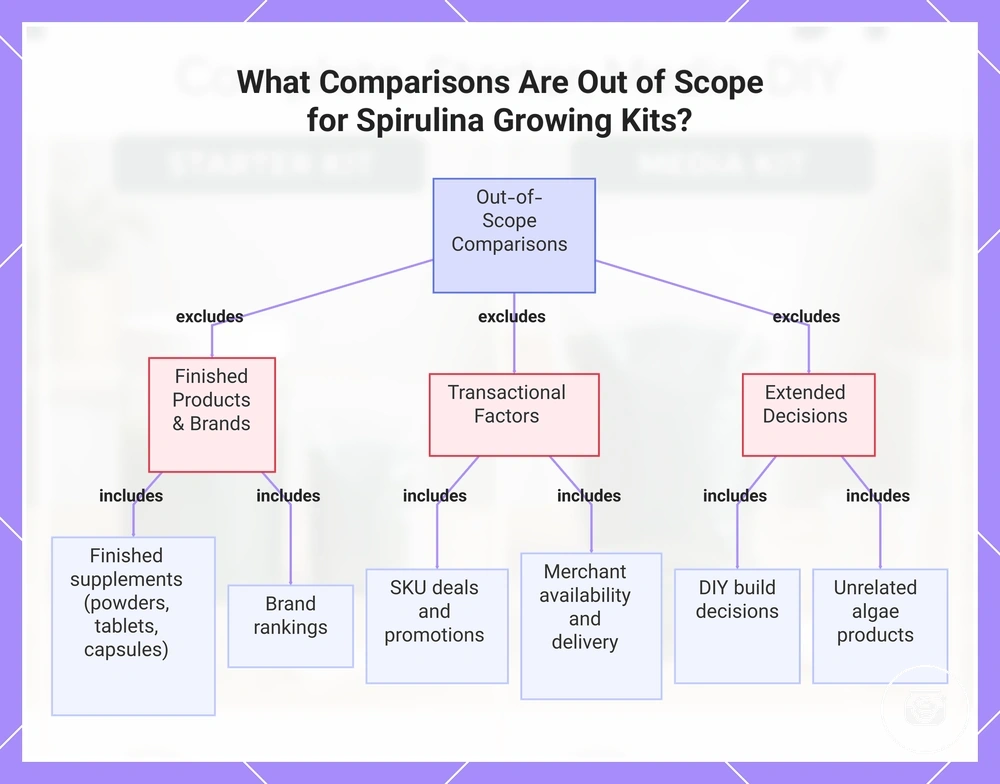
This page compares growing kit types, not finished spirulina products, individual brands, or merchant offers. An out-of-scope comparison is any comparison that does not change the included cultivation supplies, sourcing responsibility, or setup burden of a kit format. This scope boundary keeps the comparison focused on complete, starter, medium, and DIY kit structures.
This scope boundary keeps the comparison focused on complete, starter, medium, and DIY kit structures.
The misconception is that brand ranking, SKU deals, or merchant availability should determine the appropriate kit type; these factors describe particular products or offers rather than the structural format of a growing kit. The following boundary checklist separates out-of-scope spirulina product comparisons from kit-format decisions and preserves an affiliate-safe decision support role.
- Finished supplements: Powders, tablets, capsules, and other finished spirulina products are consumption formats rather than growing kit types.
- Brand rankings: Brand-versus-brand comparisons do not determine whether a growing kit is complete, starter, medium, or DIY.
- SKU deals: Item-level discounts, bundles, and promotions concern specific listings rather than kit-format structure.
- Merchant availability: Stock status, delivery terms, and seller-specific availability remain outside this structural comparison.
- DIY build decisions: Detailed component selection, assembly methods, and full build planning extend beyond comparing kit types.
- Unrelated algae products: Products based on other algae species or non-cultivation uses fall outside this spirulina growing-kit scope.
This chart shows the categories of product comparisons that are excluded from spirulina growing kit type comparisons, keeping the focus on kit structure.